Showing posts with label lamprophis fuliginosus. Show all posts

Tuesday, November 6

New House Snake Blog and Website

I have finally found the time to set up my website that will both provide information about the African House Snake and other African Colubrids and be my outlet for selling my captive bred animals.

I have set up a new house snake blog on that site as well and I will post all new information and articles to the new blog.

I am leaving this existing blog up for informational purposes but will not be posting any new content to it.

Here is the location of the new African House Snake Website

and

Here is the location of the new House Snake Blog

You may note that I am now providing a very in depth care sheet and a free copy of "The Reptile Book" by Raymond L. Ditmars on the new site to people that join my email list. If you are already on the list I will be doing a broadcast email to you today to let you know how to get your copies with out rejoining a second time so if you are already on the list you will get that email in just a bit.

I have been asked why one must be on my email list to get a copy of this care sheet and my answer is two fold.

1. I want you on my email list! In return I provide valuable information but the only way I will ever have a thriving breeding business is to build up a list of Reptile Enthusiasts. I don't "hard sell" anything here and never will but I do let people know when animals are available both from myself and other sources.

2. And more important for you, the care sheet is NOT a static document. In fact there are some nasty typos on it as I had to rush it into print. Beyond that though I am learning more about the care, breeding and species ID of Lamprophis every single day. The care sheet will be updated at least once a month. By being on my email list you will always have access to the most current version.

I hope the new site and new blog are helpful to everyone. I have already put up a great resource for House Snake Species Identification on the site, so you may want to check that out. In time I will develop full pages for each species.

The house snake world is more exciting every day, I will be acquiring some Het Amel Maculatus later next year. I have L. inortus and more Amel L. capensis on the way.

Stay tuned and enjoy the new site and blog.

Jack Spirko

Friday, September 22

Pictures of a "normal" Zululand Phase Cape House Snake

Often House Snake dealers are asked what kind of "mophs" do you have and I think very few people realize just how beautiful a "normal" house snake can be. That is certainly the case with this male.

He is a plain old normal Cape House Snake, (Lamprophis Capensis) commonly called the Brown House Snake and there for confused with his cousin the Brown House Snake from further north (Lamprophis Fuliginosus). [See Why Why Won't these House Snake Breed for more information about the confusion between L. Fuliginosus and L. Capensis.

It is amazing what a good camera and good lighting can do to show off these snakes. The more I work with them the more I believe it is good photography that is separating House Snakes from being bigger in the pet trade and nothing more. Have a look at this guy, all shots can be enlarged by clicking on them. These shots are of a young male (roughly 14 months old) about two feet in total length.

The first shot gives a good look at the beautiful pattern on most Zululand Phase House Snake you can also see the one patch of skin that did not come off his head on his last shed. It is the big scale behind his right eye. It was traumatic to him when I tried to remove it so I decided it will come off next shed and is doing him no harm, his eye caps shed fine.


The next shot gives you a great image of that vertical pupil but this is no viper just a harmless house snake. You will also see that his eye line has a clear break in it. I can't say for certain that all Capensis have this break and all Fuliginosus with eye lines do not but in every fuliginosus I have see that had eye lines the line passed well beyond the neck joint and every Capensis had this clean clear break right before the neck joint.


Many people do not know that Lamprophis means "shining" this shot shows why check out the luminicence on his head,


This shot is my favorite from this group of photos, again you can see why they are known as the "shining snake".


Last one and just look at that eye!


The new care sheet will be coming soon so keep stopping by,

~ Jack Spirko


Pictures of a Tanzanian Red House Snake

Here are two pictures of one of our young Tanzanian Female Red House Snakes. This is the most common species Lamprophis Fuliginosus which is highly variable in color and pattern. Red of course is the most popular color for obvious reasons.

The two pictures here are really the same picture cropped differently because this is our one biter in the bunch and she is still adjusting to captivity. While she has not bit for over a week she still is a bit nervous so I put her up as soon as I got a decent shot to work with. She is currently about 16 inches and about the diameter of a pencil. She is going to be one beautiful adult and produce some wonderful babies one day.

This "high red" is not from selective breeding, she is actually a wild caught animal strait from Tanzania. Right now we are adding animals only from known blood lines, either via captive bred from fellow breeders who keep lines pure or from known localities and species from ethically captured animals.

Clicking on the images will enlarge them to their full size,

In the first shot you get a really nice view of her beautiful color and pattern. House Snakes look their best under good light. Look at this girl under pale light and you see here is mildly red brown but looks what happens with good lighting. What a beautiful little girl!


I reduced the next image less and cropped it tighter around her head so you could get a better look at the head pattern, eye striping and the eyes themselves.


We will be posting a very in depth care sheet and some shots of one of our Zululand "Normals" in the next few days so stay tuned.

~ Jack Spirko

Monday, September 4

What is a Transvaal African House Snake

That was the question I asked Donald Shultz at Mfezi.com on the phone a few months ago. I had found Don’s Website and noticed he had House Snakes of several species and available and was bringing in new ones all the time from a mix of captive bred and wild caught stock. At the time I was focused on one thing, “red phase” brown house snakes (AKA Lamprophis Fuliginosus) doing some selective breeding to intensify the red.

I ended up getting about 9 animals including a nice pair of cape house snakes, and an amel and het amel cape house snake pair and three of the “red phase” Lamprophis Fuliginosus I had been looking for. Don then mentioned that he had a single sub adult male (about 18 months of age), Transvaal Phase Cape House Snake (Cape House Snakes are species L. Capensis, see Why Won’t these House Snakes Breed for more info on Capensis and Fuliginosus) and did I want him too?

My first reaction was no. First I had already expanded my narrow focus with this one call from high reds to also include (amels –which I intended on) and now these new cape house snakes (on which I had not intended) and now here was a third variety (my wife would want to shoot me). He had a pretty nice proposition for me though, “let me send him with the others, check him out, if you like him send me 50 dollars more and he is yours”.

Was that hard to pass up? You bet and I have to say I never have considered sending the animal back and I now have Don looking for a second male and up to three females for future breeding efforts.

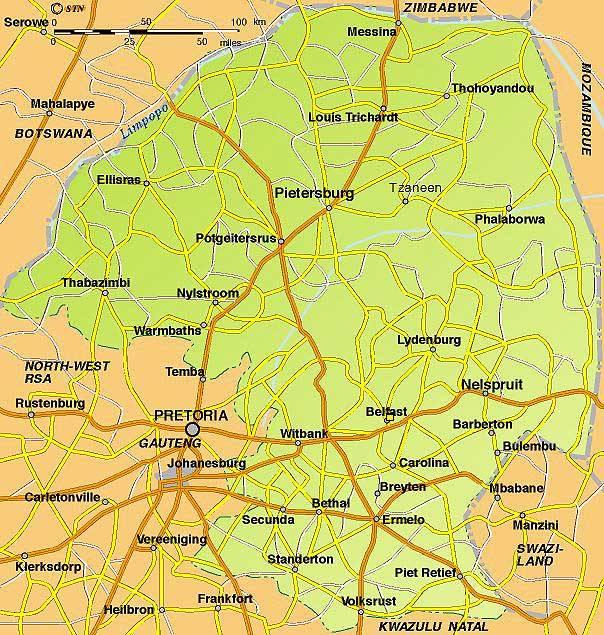
Transvaal it turns out is a Region in what is now the Nation of South Africa and while the species L. Capensis (Cape House Snake) is indigenous through most of South Africa and into some adjoining nations the Transvaal Phase of that species is located in the region of its’ namesake.

What makes Transvaal House Snake different is a few things. First they tend to grow larger on average then their cousins from Tanzania just as all phases of L. Capensis do, though they don’t reach the size of the Zululand Phase. Second the shining iridescence of the typical house snake is less pronounced but it made up for in the third key difference, which is an extremely light coloration, ranging from a light cinnamon to almost appearing to be amelanistic. The lightest in color, of the Transvaal Phase animals come from a smaller sub region called the Highveld.

The Highveld is a high plateau area of South Africa, which includes the largest metropolitan area in the country, Johannesburg. The area of the Highveld is the size of Belgium, starting east of the Johannesburg center and stretching to the Swaziland border, encompassing rural and urban areas of around 30 thousand square kilometers (about 11,500 square miles).

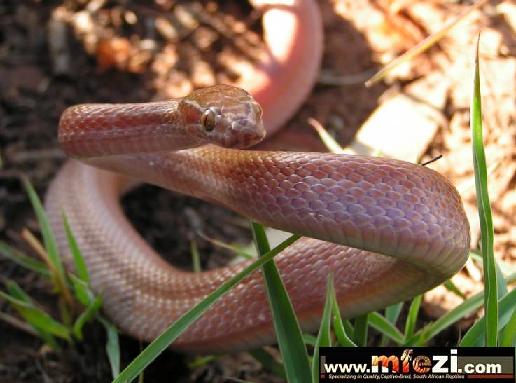
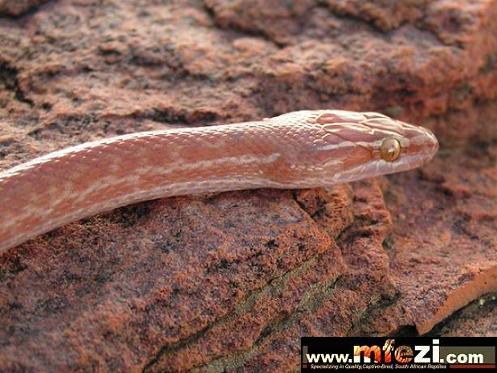
The following pictures were provided by Don at Mfezi.com and are actual images of a wild Transvaal Phase House Snake in the Highveld Region. Don tells me the coloration and pattern are typical for this phase.


My animal is a bit darker in coloration but stunning nonetheless. Here are the best images of him that I have at present time.


Please note that we are currently using a pretty low end 3 MP Digital Camera but will be upgrading to an brand new Olympus EVOLTE E-500 DSLR soon and we can then begin to provide much better quality photos of our personal collection of herps. Just know for now the snake in this picture is quite a bit more striking in person.

Now that I am aware of the Transvaal Phase of the Cape House Snake I am hooked on learning more about its potential for selective breeding to enhance the extreme light coloration and bring out the most in its size potential , which is well past 4 feet for females and close to the 4 foot mark for males.

This is the beauty of African House Snakes that has yet to be appreciated by American Breeders. There is still so much to learn and do with the entire Genus of Lamprophis, (“The Shinning Snake”). Consider when was the last time you heard about a naturally occurring common phase of milk, corn, king or bull snakes that the majority of the herpetology world and pet trade knew little to nothing about? The potential is unlimited and the majority of information is yet unknown when it comes to all of the Lamprophis family and that, for me is part of why they are so appealing.

~ Jack Spirko